
CNC Machining Services: CNC vs MJF and 3D Printing Process Selection
Choosing between CNC Machining Services and additive manufacturing processes such as MJF and other 3D printing technologies is an important engineering decision during product development. The most suitable process depends on material requirements, dimensional accuracy, surface finish, component geometry, production quantity, mechanical performance and functional testing needs. CNC machining removes material from a solid workpiece to create precise components, while MJF and other additive processes build parts layer by layer. Each process has different strengths and limitations. This article compares CNC Machining Services with MJF and 3D printing from the perspectives of dimensional control, material behavior, geometry, surface quality, production volume, tooling, post-processing, inspection and application requirements, helping engineers and purchasing teams select a practical manufacturing process for prototypes and low-volume production.
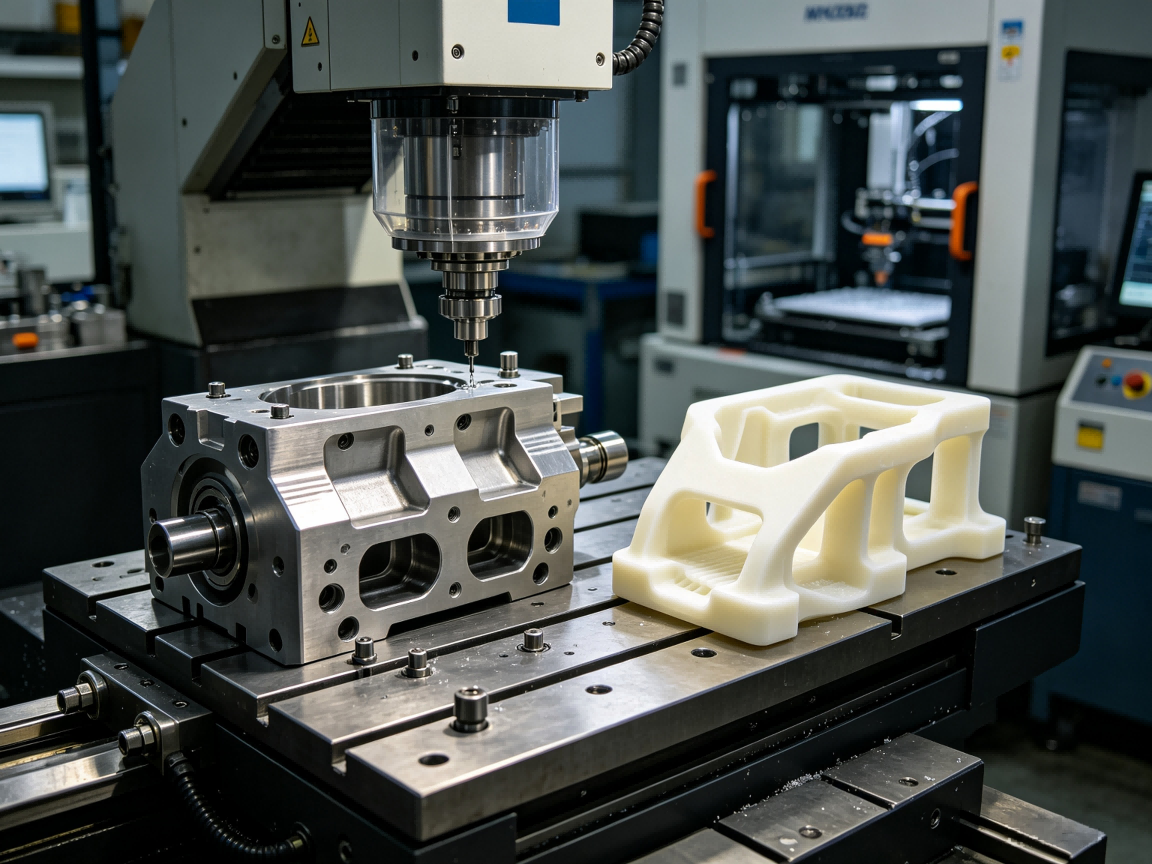
Manufacturing process selection affects more than the initial production price. The selected process can influence dimensional accuracy, surface condition, mechanical properties, assembly performance, inspection requirements and development time.
A prototype may be visually complex but have relatively low functional requirements. In this situation, additive manufacturing can provide a fast way to produce an early physical model. Another prototype may need to fit into an existing mechanical assembly, withstand repeated loading or represent the final material closely. CNC Machining Services may provide a more appropriate manufacturing route in such cases.
Process selection should therefore begin with the purpose of the component rather than simply comparing machine prices.
CNC Machining Services use computer-controlled machine tools to remove material from a solid workpiece. Milling, turning, drilling, boring, tapping, reaming and other machining operations can be combined to manufacture precision components.
The process can produce components from metals and engineering plastics, depending on machine capability and material availability.
Typical CNC manufacturing characteristics include:
Direct machining from solid material
Controlled dimensional accuracy
Good repeatability for production parts
Wide material selection
Machining of functional holes and threads
Machining of precision mating surfaces
Different surface finishing options
Suitability for prototypes and low-volume production
Multi Jet Fusion, commonly called MJF, is an additive manufacturing process that creates parts layer by layer using polymer powder and controlled fusion processes. It is often used for functional prototypes, complex polymer components and small production batches.
Unlike CNC machining, MJF does not begin with a solid block and remove material. The component is built according to digital geometry.
This difference creates several important manufacturing distinctions.
| Characteristic | CNC Machining Services | MJF and 3D Printing |
|---|---|---|
| Basic Process | Material removal | Layer-by-layer material addition |
| Typical Materials | Metals and engineering plastics | Primarily printable polymer materials depending on process |
| Tooling | Requires cutting tools and workholding | Does not require conventional cutting tools |
| Complex Geometry | Limited by tool accessibility | Can produce many geometrically complex forms |
| Surface Condition | Depends on machining strategy and finishing | Depends on printing process and post-processing |
| Internal Features | Must be physically accessible to tools | Can be easier to produce when supported by the printing process |
pemVerify all parameters against current test reports and applicable standards before use in specifications.emp
Dimensional requirements are often one of the first factors engineers consider when comparing CNC Machining Services with 3D printing.
CNC machining removes material using controlled cutting operations. The final dimensions depend on machine capability, tooling, workholding, material behavior, cutting parameters, tool wear and inspection.
3D printing dimensions depend on the printing technology, material, layer process, part orientation, thermal behavior and post-processing. Complex geometry may be easier to create, but certain dimensions can still require process-specific compensation.
When a component contains precision mating surfaces, bearing seats, functional holes or tightly controlled interfaces, CNC machining may provide a practical manufacturing route. The actual achievable tolerance should always be confirmed according to the specific machine, material and process.
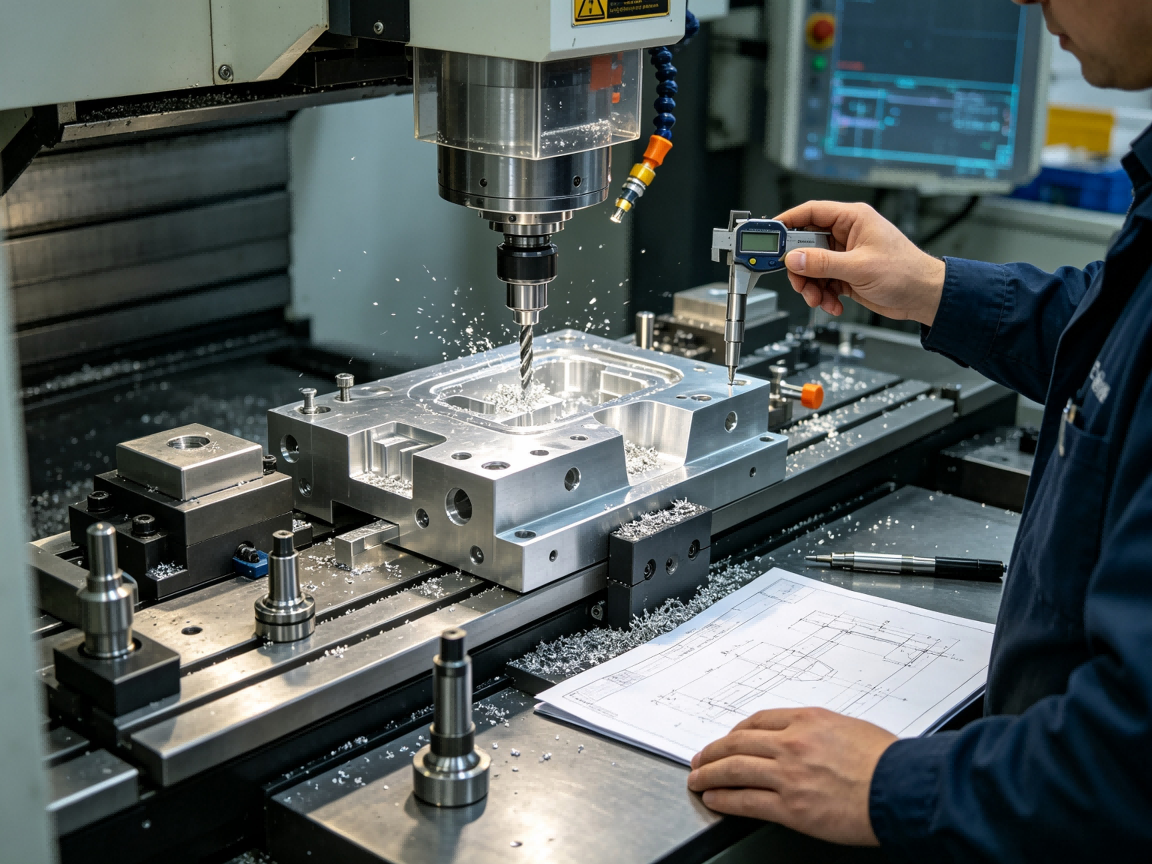
Complex geometry can change the balance between CNC machining and additive manufacturing.
CNC machining requires physical access for the cutting tool. Deep internal cavities, enclosed channels and highly complex internal structures can be difficult or impossible to machine using conventional cutting tools.
MJF and other additive processes can create geometries that would be difficult to manufacture through subtractive machining because material is added layer by layer.
However, complex printable geometry does not automatically mean that 3D printing is the best choice. The engineer must still consider material performance, dimensional requirements, surface condition, assembly interfaces and post-processing.
Tool accessibility is one of the main differences between CNC machining and additive manufacturing.
A CNC cutter must physically reach the surface being machined. Tool diameter, tool length, overhang, holder clearance and part orientation all influence accessibility.
This can affect features such as:
Deep pockets
Narrow slots
Small internal radii
Hidden surfaces
Undercuts
Complex internal cavities
Angled features
When a design contains many difficult-to-access features, engineers may need to modify the geometry, add machining setups or use multi-axis CNC equipment.
Material selection is often more important than geometric complexity when the component will be used in a functional application.
CNC Machining Services can use a broad range of machinable metals and engineering plastics. The selected material can be chosen according to mechanical strength, hardness, corrosion resistance, temperature requirements, wear conditions and other application factors.
MJF provides access to printable polymer materials suitable for many prototype and production applications. However, the material behavior of a printed component should be evaluated according to the specific application and printing process.
Engineers should avoid selecting a manufacturing process only because it can reproduce the desired shape. The finished component must also satisfy the functional requirements of the product.
Surface finish can affect appearance, friction, sealing, assembly and dimensional performance.
CNC machining produces surfaces through controlled cutting. Surface roughness depends on cutter geometry, feed rate, spindle speed, tool condition, material, toolpath and finishing strategy.
3D printed components have process-dependent surface characteristics. Layer formation, orientation and post-processing can influence the resulting surface.
If a prototype needs to represent a machined mating surface or sealing interface, CNC machining may be more appropriate. If the main objective is to validate overall shape and assembly concept, a 3D printed prototype may provide a practical solution.
Not all prototypes have the same purpose.
A visual prototype may only need to confirm dimensions, appearance and basic assembly. A functional prototype may need to operate under realistic mechanical, thermal or environmental conditions.
CNC Machining Services can be useful for functional prototypes when the final component requires a specific metal or engineering plastic and the prototype needs to closely represent the machined geometry.
3D printing can be useful when engineers need to evaluate complex shapes, fit, ergonomic design or internal geometry before committing to a more production-oriented process.
Low-volume production creates a different process-selection situation from one-off prototyping.
CNC machining does not normally require a dedicated mold for each component. Production can begin from the digital design after programming, tooling and workholding are prepared.
MJF also avoids conventional molds and can produce multiple components in a build process. This can make additive manufacturing attractive for certain low-volume polymer applications.
The appropriate process depends on part size, quantity, geometry, material, tolerance and post-processing requirements.
| Production Requirement | CNC Machining | MJF / 3D Printing |
|---|---|---|
| Metal Functional Parts | Strong manufacturing option | Process and material dependent |
| Complex Polymer Geometry | May require multiple setups or specialized tools | Can simplify many complex shapes |
| Precision Mating Features | Suitable with controlled machining and inspection | May require post-processing |
| One-Off Prototype | Suitable when functional material is important | Suitable for rapid design validation |
| Low-Volume Polymer Parts | Suitable depending on geometry and cost | Can be suitable for complex designs |
| Deep Internal Geometry | Limited by tool accessibility | Can provide greater geometric freedom |
pemVerify all parameters against current test reports and applicable standards before use in specifications.emp
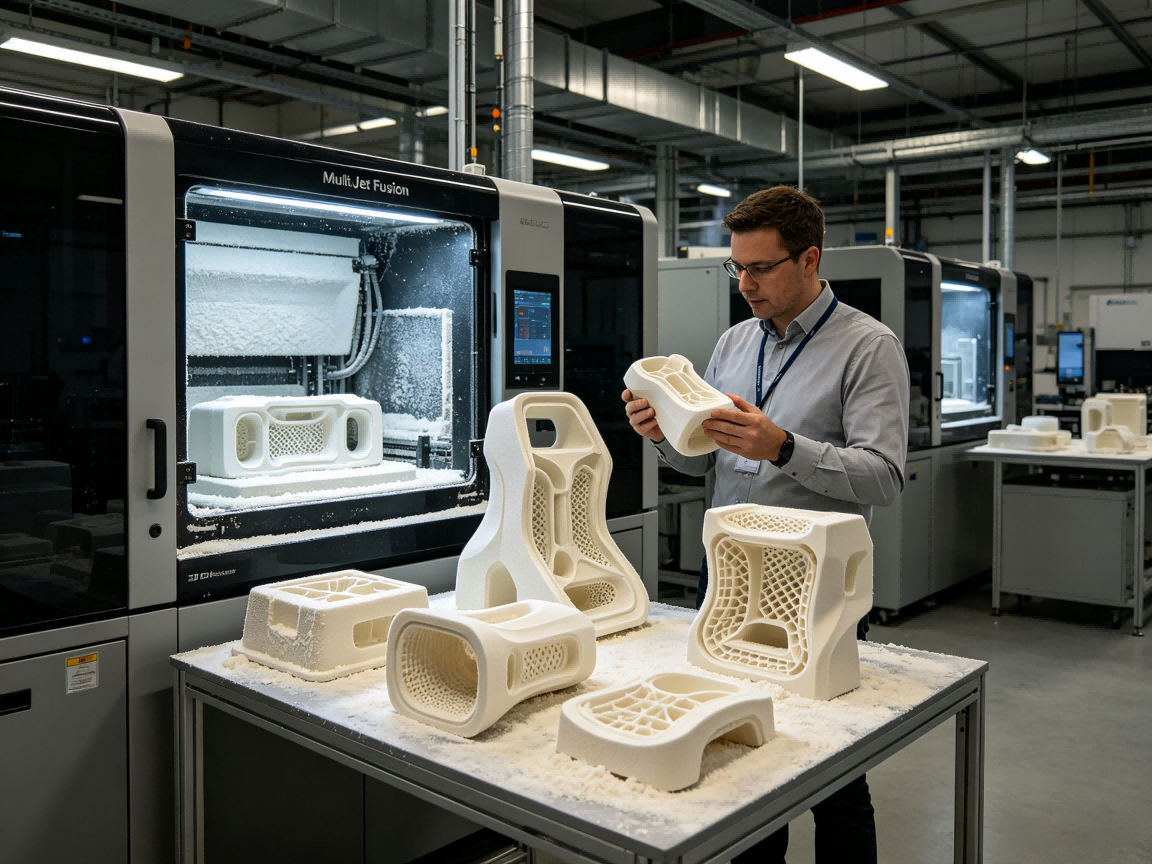
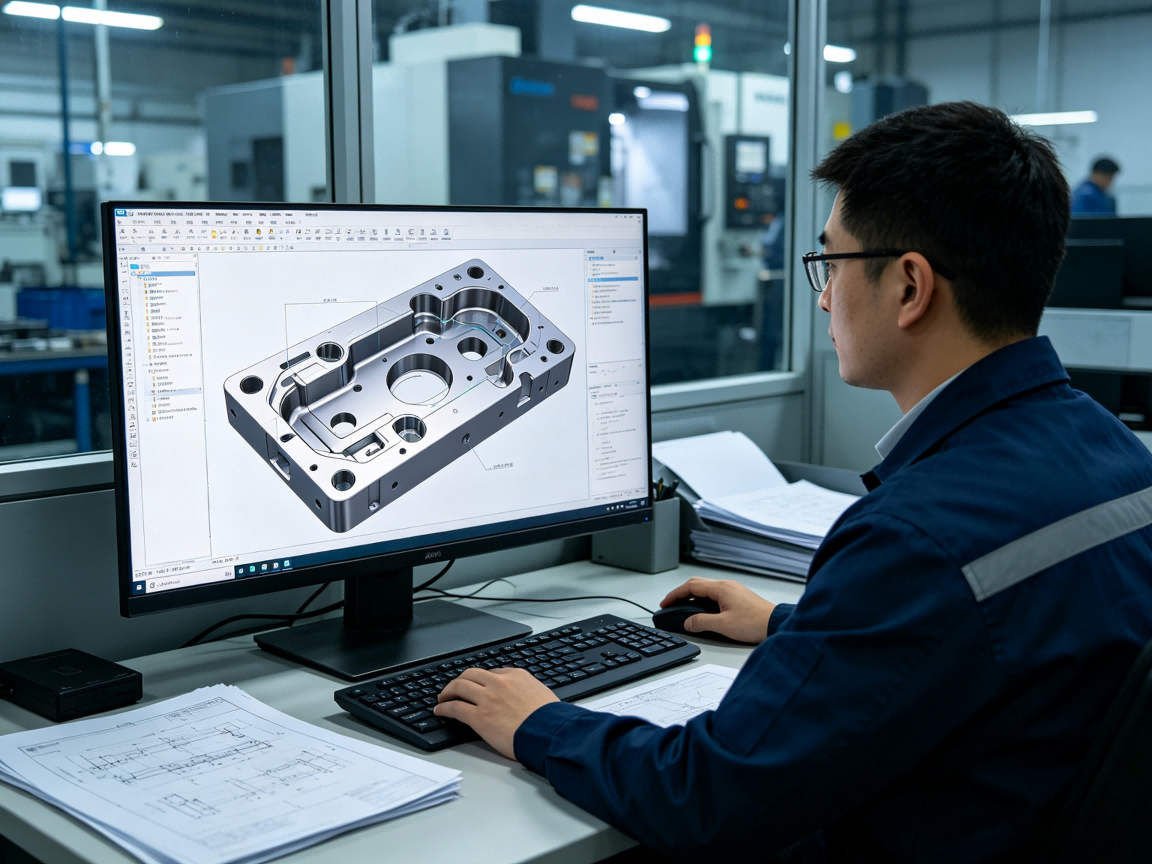
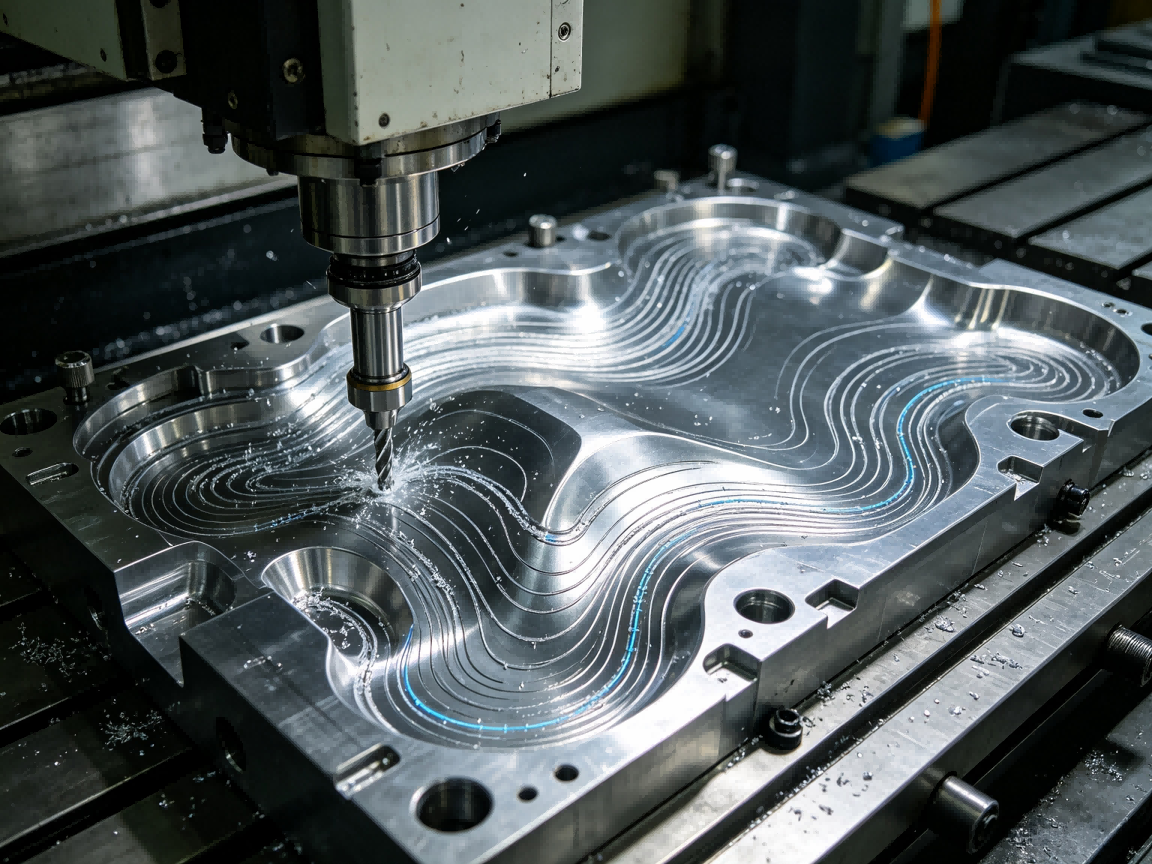
Production quantity should be considered together with geometry and material.
For a simple metal component, CNC machining may be practical even at relatively low quantities because no dedicated molding process is required. For a complex polymer component, additive manufacturing may offer advantages when tooling would otherwise create unnecessary development cost.
As quantity increases, cycle time, fixture efficiency, tool life, machine utilization and process repeatability become increasingly important.
Cost comparison should therefore include the complete manufacturing process rather than only the initial machine operation.
Neither CNC machining nor 3D printing necessarily represents the complete manufacturing process.
CNC components may require deburring, cleaning, surface treatment or other finishing operations. Printed components may require powder removal, surface finishing, dimensional finishing or other post-processing depending on the technology and application.
Post-processing should be included in the process comparison because it can affect both production time and final dimensions.
Inspection requirements can influence process selection when a component has important functional dimensions.
CNC Machining Services can incorporate dimensional inspection using appropriate measuring equipment. Critical dimensions, hole positions, flatness, perpendicularity and other requirements can be checked according to the drawing and inspection plan.
Printed components can also be inspected, but their process-specific dimensional behavior should be understood when interpreting measurement results.
For high-importance functional features, inspection should be planned together with the manufacturing process rather than added after production.
CNC machining may be considered when the project requires:
Metal components
Functional engineering plastics
Precision mating surfaces
Functional holes and threads
Controlled dimensional requirements
Machined surface finish
Prototype parts made from production-relevant material
Low-volume precision components
The final process decision should still be based on the actual component requirements.
MJF and other 3D printing processes may be considered when the project requires:
Complex polymer geometry
Rapid design iteration
Internal structures difficult to machine
Prototype shape validation
Low-volume polymer components
Reduced dependence on conventional tooling
The selected printing technology and material should be evaluated against the required mechanical and dimensional performance.
CNC machining and 3D printing do not always need to be treated as competing technologies.
A development project may use 3D printing during the early design stage and CNC machining after the geometry has been validated. This can reduce the risk of spending machining resources on a design that has not yet been confirmed.
Another approach is to combine printed structures with machined functional interfaces. For example, a printed prototype body may be used to validate overall geometry while critical mating components are manufactured through CNC Machining Services.
Hybrid strategies can be useful when different parts of the product have different manufacturing requirements.
| Evaluation Item | Key Question |
|---|---|
| Material | Does the selected process provide the required material performance? |
| Geometry | Can the required features be produced reliably? |
| Tolerance | Can the process achieve the functional dimensional requirements? |
| Surface Finish | Does the process provide the required surface condition? |
| Quantity | Is the process economical for the planned production volume? |
| Post-Processing | What additional operations are required after manufacturing? |
| Inspection | Can critical dimensions be measured effectively? |
| Lead Time | Can the process meet the required development or production schedule? |
pemVerify all parameters against current test reports and applicable standards before use in specifications.emp
A practical selection process begins with functional requirements rather than manufacturing preference.
Define the purpose of the component.
Identify the required material.
Determine critical dimensions and tolerances.
Evaluate surface finish requirements.
Analyze geometric complexity.
Check tool accessibility for CNC machining.
Evaluate production quantity.
Estimate post-processing requirements.
Define inspection requirements.
Compare the complete manufacturing cost and lead time.
This method helps avoid selecting a process based only on geometry or unit price.
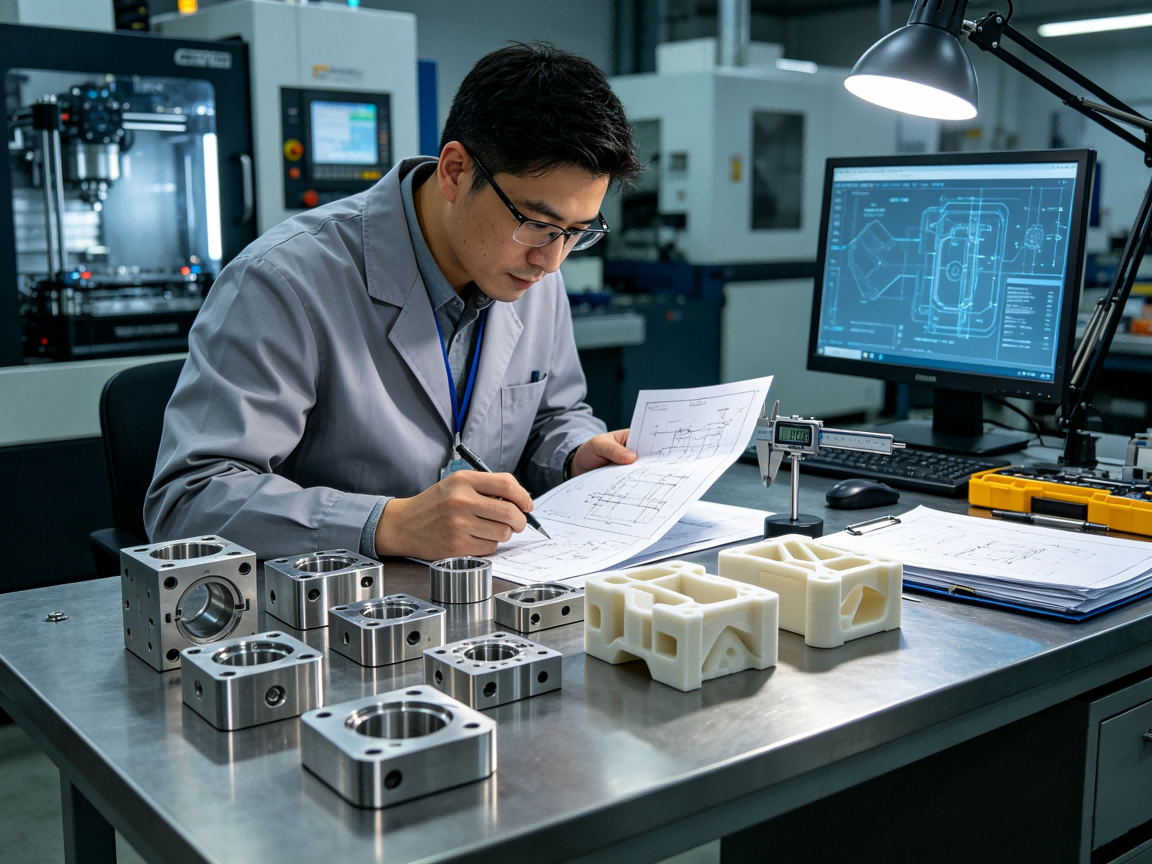
Complex geometry can favor additive manufacturing, but material, strength, tolerance and surface requirements may still make CNC machining more appropriate.
Not every prototype requires tight machining tolerances. If the primary objective is shape validation, a suitable 3D printing process may reduce development time.
The initial manufacturing process is only part of the total production route. Finishing, cleaning, dimensional correction and inspection can affect the final cost and lead time.
Production quantity changes the cost structure. Setup, tooling, programming, build utilization and post-processing should all be considered.
A visually accurate prototype may not represent the mechanical behavior of the final product. Material selection should therefore be connected to the purpose of the prototype.
Dongguan city Jifan Precision Machinery Co., Ltd provides CNC Machining Services for customized components, prototype development and production machining. The company supports engineering evaluation, automated production and customized manufacturing requirements for components used across automotive, textile and packaging machinery, non-standard automation equipment and construction machinery applications.
For projects involving prototype development or low-volume production, manufacturing requirements can be reviewed from geometry, material, tooling accessibility, machining strategy and dimensional inspection perspectives.
The appropriate process depends on the component's material, geometry, tolerance, surface finish, quantity and functional requirements. CNC machining and 3D printing solve different manufacturing problems.
MJF can be suitable for many functional polymer prototypes, particularly when complex geometry and rapid production are important. The selected material and printing process should be evaluated against the actual application.
Yes. CNC machining can produce highly complex components using suitable tooling, multiple setups, 3+2 machining or multi-axis machining. However, tool accessibility remains an important design consideration.
CNC Machining Services can be a practical option when a metal prototype requires controlled dimensions, functional surfaces, holes, threads or production-relevant material. The final choice depends on the specific component.
Yes. A project can use 3D printing for early geometry validation and CNC machining for later functional prototypes or production components. Different manufacturing processes can be selected for different development stages.
CNC Machining Services, MJF and other 3D printing technologies each provide different manufacturing capabilities. CNC machining offers controlled material removal, broad material options and practical solutions for precision functional components, while additive manufacturing can provide greater geometric freedom and efficient prototype development for suitable polymer applications.
The correct process should be selected according to the purpose of the component. Material, dimensional requirements, surface finish, tool accessibility, production quantity, post-processing, inspection and functional performance should all be considered together.
For engineers and purchasing teams, the most effective approach is to compare the complete manufacturing process rather than focusing only on geometry or unit price. In many development projects, CNC Machining Services and 3D printing can also complement each other, allowing teams to validate designs quickly before moving toward stable low-volume production.
Share your project parameters for a technical review.
이 웹사이트는 귀하가 당사 웹사이트에서 최상의 경험을 할 수 있도록 쿠키를 사용합니다.

 English
 Español
 Portugues
 Pусский
 Français
 Deutsch
 日本語
日本語 العربية
 Italiano
 Nederlands
 Svenska
 Polski
 ไทย
ไทย Türk dili
 Indonesia
 Tiếng Việt
 čeština
 Română
 Suomalainen


논평
(0)